

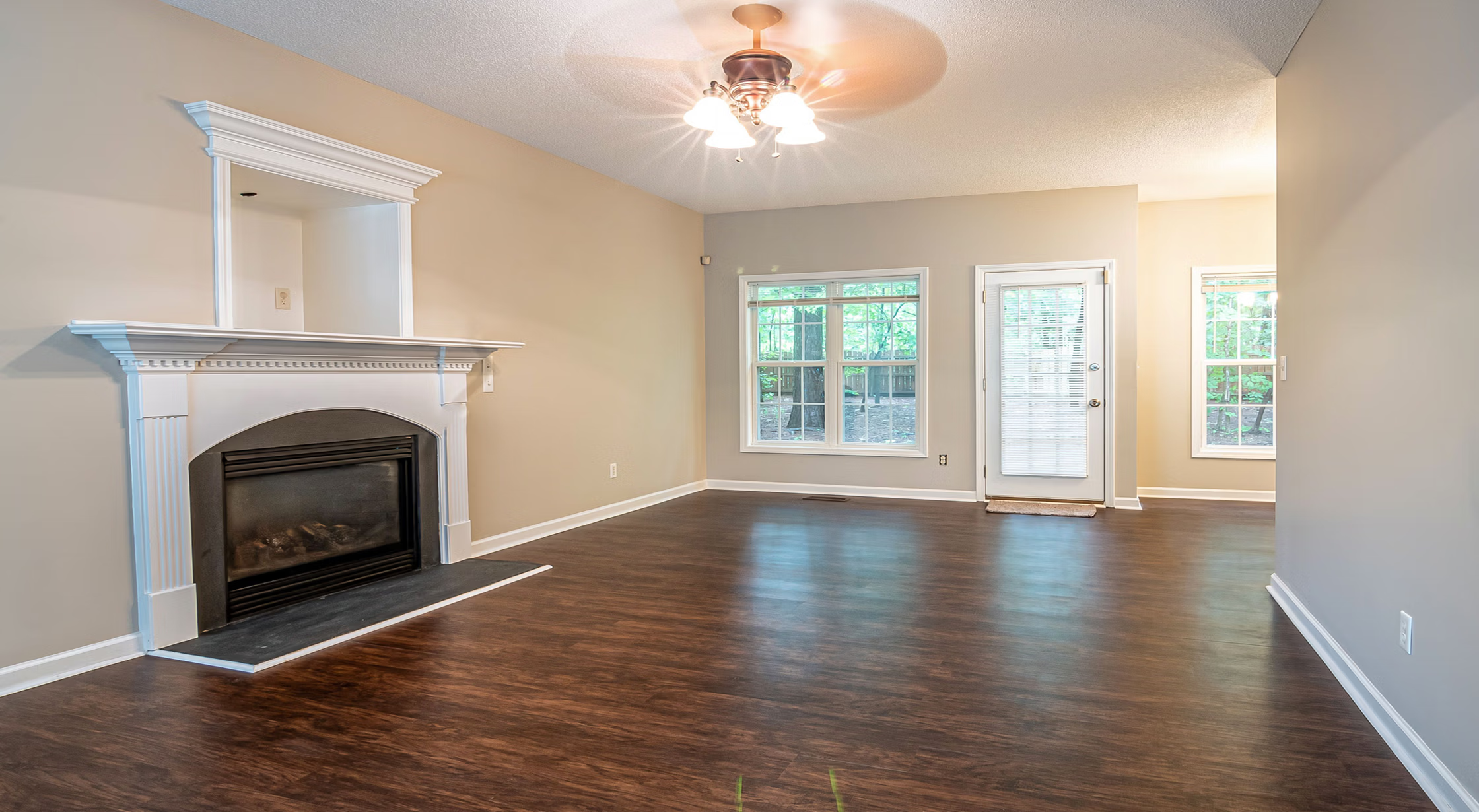
Is the Property Vacant or Truly Abandoned?
Vacant Property
Not currently occupied, but may still be maintained, insured, secured, connected to utilities, ready for sale or rent, and regularly checked by its owner.
Neglected or Abandoned-Looking
May show broken windows, open doors, overgrown vegetation, accumulated mail, unpaid utilities, major damage, code violations, or unauthorized occupants.
Being empty for a long time doesn't mean the owner loses ownership. We'll use "vacant" as the normal term here, and "abandoned" only for genuinely severe neglect.
What Does It Cost to Keep a House Vacant?
Possible ongoing expenses: mortgage payments, property taxes, home and vacant-property insurance, electricity and water, lawn maintenance, pest control, HOA fees, security or monitoring, property management, emergency repairs, travel to check the house, and code-compliance expenses.
This is only an illustration, not a typical San Antonio amount. Holding a house like this for six more months could cost roughly $13,500 before major repairs or selling expenses.
Vacant House Insurance Can Be Different
This is one of the clearest real risks of vacancy. A standard homeowners policy may reduce or stop covering certain losses once a property has been vacant for the period stated in the policy. The Texas Department of Insurance notes that most companies stop some coverage after roughly 60 days of vacancy, though the policy's exact language controls.
What to do:
- Inform the insurance agent the house is vacant
- Ask whether current coverage remains active
- Ask which losses are excluded
- Ask whether vacant-home coverage is needed
- Confirm utility, inspection, and security requirements
- Keep written proof of the insurer's response
Does a Vacant San Antonio House Have to Be Registered?
Not every vacant San Antonio house. San Antonio's Vacant Building Program applies only when the building meets the city's vacancy definition — lawful activity ceased, or appears to have ceased, for at least 30 days — and is located within specified program boundaries (the central business district and buffer, historic districts and landmarks, areas near active military installations, certain tax-increment reinvestment zones, neighborhood conservation districts, and areas near schools or licensed childcare facilities). The program doesn't apply to vacant lots.
When the program applies, an owner may have to register the building, renew annually, pay applicable fees, maintain the structure, secure doors and windows, keep the grounds compliant, and — if living outside the county — designate a local property manager.
Check Whether Your Property Falls Within the Program
Fees and requirements can change — always verify against the current official page.
City of San Antonio — Vacant Building Program →Not accurate: "All San Antonio vacant homes must pay a registration fee." Only qualifying properties within program boundaries are affected.
Main Risks of Leaving a House Empty
Undetected Damage
A small roof leak, plumbing failure, or HVAC problem can grow when no one is checking the property — and some policies exclude gradual, vacancy-related losses.
Theft & Vandalism
An obviously empty property may attract copper or appliance theft, broken windows, graffiti, or illegal dumping — though not every vacant home will be targeted.
Unauthorized Occupants
Someone may enter unlawfully, or a former tenant, relative, or heir may claim a right to remain — this is not automatically a "squatter" situation.
Code Violations
Tall grass, trash, unsafe structures, or unsecured doors can lead the city to abate the condition and place a code lien on the property.
Insurance Problems
Vacancy may change coverage, premiums, deductibles, inspection requirements, claim eligibility, or renewal availability.
Continuing Costs
Mortgage, taxes, insurance, HOA assessments, utilities, maintenance, and security costs keep accruing whether or not anyone lives there.
What Should You Do if Someone Is Living There Without Permission?
First, determine who the person is — an apparent trespasser, a former tenant, a previous owner, an heir, a family member, a long-term guest, or someone claiming an oral or implied lease. The legal process differs substantially depending on how the person originally entered. TexasLawHelp notes that removing someone who claims to live at the property will often require a formal eviction and court order — owners generally shouldn't simply place belongings outside and change the locks.
- Don't enter alone if it may be unsafe
- Contact law enforcement for an active break-in
- Photograph visible conditions lawfully
- Preserve deeds, leases, and communications
- Don't shut off utilities to force someone out
- Speak with a Texas landlord-tenant attorney
Should You Repair the House Before Selling?
Not automatically.
Repairs May Make Sense When:
- The work is mostly cosmetic
- Reliable contractors are available
- The expected proceeds increase exceeds the cost
Selling As-Is May Make Sense When:
- Repairs are extensive or the owner lives far away
- Insurance or security costs are rising
- The repair budget is uncertain
Compare that with the estimated net proceeds from an as-is offer — the highest sale price isn't necessarily the highest amount you keep.
Options for a Vacant San Antonio House
| Option | Repairs | Market Exposure | Seller Workload | Timeline Certainty | Main Tradeoff |
|---|---|---|---|---|---|
| Repair and list | Usually higher | High | High | Lower | Upfront cost and time |
| List as-is | Lower | High | Moderate | Moderate | Buyer inspections and negotiations |
| Rent it | Rental-ready work | No sale | Ongoing | Not applicable | Continued landlord responsibility |
| Direct as-is sale | Usually limited | One or limited buyers | Lower | Potentially higher | Offer may be below retail potential |
Scroll to see the full table on smaller screens. A vacant house is often easier to show than an occupied one — vacancy alone doesn't automatically make a direct sale the best option.
Can You Sell a Vacant House From Out of State?
Yes — many parts of the transaction can be handled remotely, though not every closing is entirely online. You may need to provide legal access, send keys or access instructions, arrange lawn maintenance, provide identification, review title documents, work with a mobile notary, or send original notarized documents.
What If the House Still Contains Belongings?
Some direct buyers may allow approved furniture, household items, or debris to remain after closing — the buyer must agree to this in writing. We won't promise "leave everything behind" unless the actual buyer and contract allow it.
Often Fine to Leave (With Approval)
Furniture, appliances, yard equipment, general household goods, stored construction materials.
Needs Separate Handling
Paint, fuel, chemicals, propane tanks, medication, firearms, vehicles, personal records, large amounts of waste.
How Our Vacant-Property Process Works
Tell Us About the House
Confirm Access & Ownership
Inspect the Property
Receive a Written Offer
Compare the Offer
Open With a Title Company
Close
We don't enter without permission or attempt to remove occupants. The written offer covers purchase price, earnest money, the option period, proposed closing date, closing expenses, required condition, whether belongings may remain, and whether the contract may be assigned. You may not need to be physically present when lawful access can be arranged.
How We Calculate an As-Is Offer
Factors may include location, size, recent comparable sales, interior and exterior condition, structural concerns, time vacant, water or weather damage, code violations, occupancy, title problems, remaining belongings, and expected holding period.
A direct investor offer isn't the same as full retail market value — it's lower because the buyer is accounting for repairs, risk, holding costs, and resale expenses.
When Listing May Be the Better Choice
- The house is clean, secured, and needs few repairs
- You have time and stable insurance
- There are no occupancy or title problems
- Maximum price is the main priority
Common Mistakes to Avoid
Failing to tell the insurance company
Vacancy may change coverage or eligibility.
Assuming every vacant home needs registration
The city program applies only under specified criteria and boundaries.
Leaving the property unsecured
Broken windows and missing locks increase damage and enforcement risk.
Ignoring mail and notices
Tax, code, insurance, HOA, and even foreclosure notices can be missed.
Entering with unknown occupants present
Handle safety and legal occupancy questions carefully.
Removing someone without legal process
A person claiming residency may require formal eviction, not a lockout.
Turning off every utility automatically
Consider insurance, security, and landscaping requirements first.
Renovating without calculating carrying costs
A six-month renovation may cost far more than the estimate.
Leaving belongings without buyer approval
Everything remaining should be addressed in writing.
Comparing offers only by price
Compare net proceeds, risk, required repairs, timeline, and certainty.
Frequently Asked Questions
Can I sell a house that has been vacant for years?
Do I have to repair a vacant house before selling?
Can I sell without traveling to San Antonio?
Does San Antonio require vacant houses to be registered?
Will my normal insurance cover a vacant house?
Can I leave the utilities off?
What if someone moved into the house?
Can I sell with code violations?
Can I sell with belongings still inside?
Is a cash offer always best for a vacant house?
Ready to Stop Maintaining an Empty San Antonio House?
Tell us about the property, its condition, how long it's been vacant, and whether any belongings remain. We'll review the information and provide a written as-is offer when the property fits our buying criteria.
You can compare the offer with repairing, listing, renting, or continuing to hold the house.
Request an As-Is Offer

Published: July 31, 2026
City of San Antonio — Vacant Building Program
TexasLawHelp — Occupancy & Eviction Resources
This article is general educational information, not legal, insurance, or tax advice. Confirm current requirements with your insurer, the City of San Antonio, and a qualified Texas attorney where relevant.